
Future‑Ready Electrical Panels: Powering 2026 and Beyond
Adapting Electrical Panels to Meet the Future’s More Demanding Loads
Rising Demand in a Rapidly Electrifying World
The climate crisis and global push toward electrification are reshaping how we consume and distribute power. Electricity demand is climbing steadily, driven by electrified homes, modern offices, advanced factories, and solar power plants means Future‑Ready Electrical Panels. Transportation systems, from electric vehicles to charging networks, add further pressure. As a result, electrical panels must evolve to handle higher currents, bi‑directional flows, and seamless integration with renewable energy sources. According to the International Electrical Agency, annual solar PV additions are projected to reach nearly 650 GW by 2026. This scale of distributed generation highlights the urgent need for panels that can manage complex loads safely and efficiently.

Modern Electrical Panels- Smart Monitoring & Control- Accu Panels Energy
What Is an Electrical Panel and Why It Matters
An electrical panel acts as the central hub for power distribution in homes, offices, factories, and even EV charging stations. It protects circuits, isolates faults, and ensures safe routing of electricity to equipment and infrastructure. Without modern panels, the risk of overloads, failures, and safety hazards increases significantly. Outdated systems struggle to support today’s expanding energy needs, especially as smart devices and renewable sources become more common. Therefore, upgrading panels is not just a technical requirement—it is a critical step toward reliability and safety in a changing energy landscape.
Principles of Future‑Ready Panel Design
To meet tomorrow’s demands, electrical panels must incorporate innovative design principles:
- Modularity: Panels should allow easy upgrades and capacity scaling, ensuring flexibility as loads increase.
- Smart Monitoring: Integration with PLC and SCADA systems enables real‑time control, predictive maintenance, and improved efficiency.
- Compliance: Adhering to IEC‑61439 standards ensures safety, verification, and global interoperability.
- Sustainability: Using recyclable materials, energy‑efficient components, and designs with lower embodied carbon supports environmental goals.
- Non rusting Metals, C5+ Powder coating, 800V+ voltage for LT Panels design, quality, protection and efficiency of switchgear with more than 5 year Product warranty for Future‑Ready Electrical Panels.
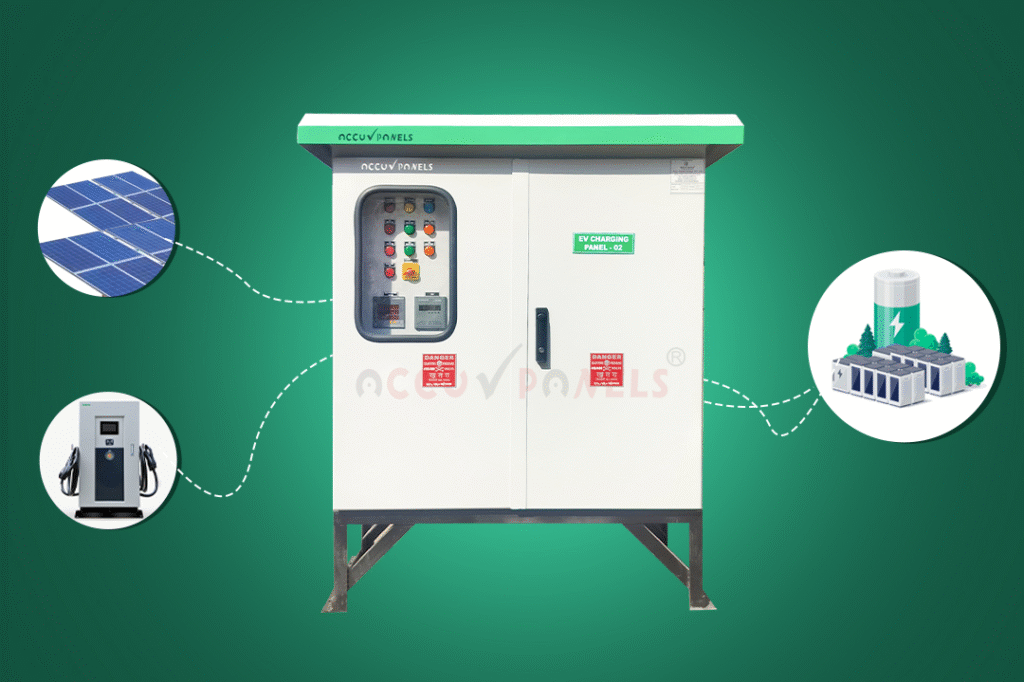
EV charging stations with visible distribution panels
Future‑Ready: 26 Common Questions for Electrical Panels and Answer By Accu-Panels Energy :
Where can I locate my electrical panel? — Most panels sit in utility rooms, basements, garages or service corridors near the incoming supply; commercial panels are in electrical rooms or plant floors. and Outdoor on RCC platform for Solar Power Plants.
Does an electrical panel require maintenance? Yes—annual visual, torque and thermal inspections plus cleaning, hardware tightness and firmware checks for smart devices extend life and prevent hazards.
When might I need to upgrade my electrical panel? Upgrade when you add EV chargers, solar inverters, frequent trips, or when load growth exceeds panel ratings—upgrade to Acc-Panels, higher‑rated assemblies.
What else can an electrical panel be used for? Panels host metering, load management, demand response, EV scheduling and local storage control, turning distribution points into energy‑management hubs.
What is the future of the electrical panel? Panels will be grid‑interactive, modular, AI monitored and certified, handling bi‑directional flows from EVs and rooftop solar while enabling predictive maintenance.
What are renewable sources of electricity? Solar, wind, hydro, biomass and storage—these integrate at panel level via inverters, smart relays and energy management systems.
What is global electricity demand? Global demand is rising as electrification accelerates; the IEA reports stronger growth driven by Asia and electrified Smart city’s and industry.
Growth in global electricity demand this year and next- As per IEA forecasts faster growth through 2026, with demand rising roughly in the mid‑single digits annually as clean electrification expands.
Role of electrical panels in keeping your factory safe Panels isolate faults, coordinate protection, and integrate interlocks and emergency shutdowns—critical for worker safety and equipment protection.
Importance of electrical panels in factories – They ensure reliable power distribution, selective protection, energy monitoring and compliance with industrial safety standards.
Types of electrical panels Common types: -Electrical LT Panels. Electrical MV Panels, Electrical Control Panels, Electrical Solar Panels, Electrical EV LT Panels, Electrical Smart Control Panels and many more.
Signs of electrical panel problems – Look for burning smells, discoloration, warm surfaces, frequent tripping, buzzing noises and visible corrosion.
Common electrical panel problems – Loose connections, overloaded circuits, aged switchgears, moisture ingress and poor ventilation are frequent failure causes.
Benefits of regular electrical panel maintenance- Maintenance reduces outages, prevents fires, improves efficiency and extends equipment life—saving costs and downtime.
How technology is shaping panel building – IoT, edge analytics, digital twins and plug‑and‑play modules speed commissioning, Fire system integration, AI integration and enable predictive maintenance.
The evolution of electrical components- Components are becoming smarter, smaller and faster: electronic breakers, solid‑state protection and integrated metering replace legacy parts.AI integrated Switchgears etc.
The influence of software and hardware engineering- Firmware, secure comms, HMI design and rugged hardware combine to deliver reliable, remotely managed panels on smart phones or AI applications.
The importance of certification and safety IEC‑61439 compliance – Ensures verified mechanical, thermal and electrical performance and is essential for global acceptance.
SCADA & PLC: the brain and nerves of modern panel systems – PLCs control local logic; SCADA supervises, logs and visualizes operations—together they enable automation and remote diagnostics.
Customization: solutions for unique challenges – Tailored busbar layouts, protection curves, metering and enclosure ratings meet site‑specific needs from malls to solar parks.
Panel construction and sustainability – Use recyclable metals, low‑VOC finishes and efficient layouts to reduce embodied carbon and improve end‑of‑life recycling.
Electrical panel market size and growth- The global market is expanding with electrification; recent reports project steady growth through 2030 driven by renewables and EVs.
Electrical panels key players and shares- Global vendors lead in scale; regional specialists like ABB, Schneider, Lauritz Knudsen, Eaton, Control and Switchgear including Accu‑Panels Energy capture global projects through IEC‑compliant, customized solutions.
Top vendors and market shares Market leaders dominate large projects; regional vendors win niche and retrofit work—market share varies by segment and geography.
Future of India in technology and electricity -India will see rapid solar, EV and industrial electrification; panels must be certified, scalable and digitally managed to meet demand.
Future of electrical panels – Envisions modular, IEC‑61439 certified, smart panels that simplify the energy transition for Gen‑Z homes, industries and utilities.
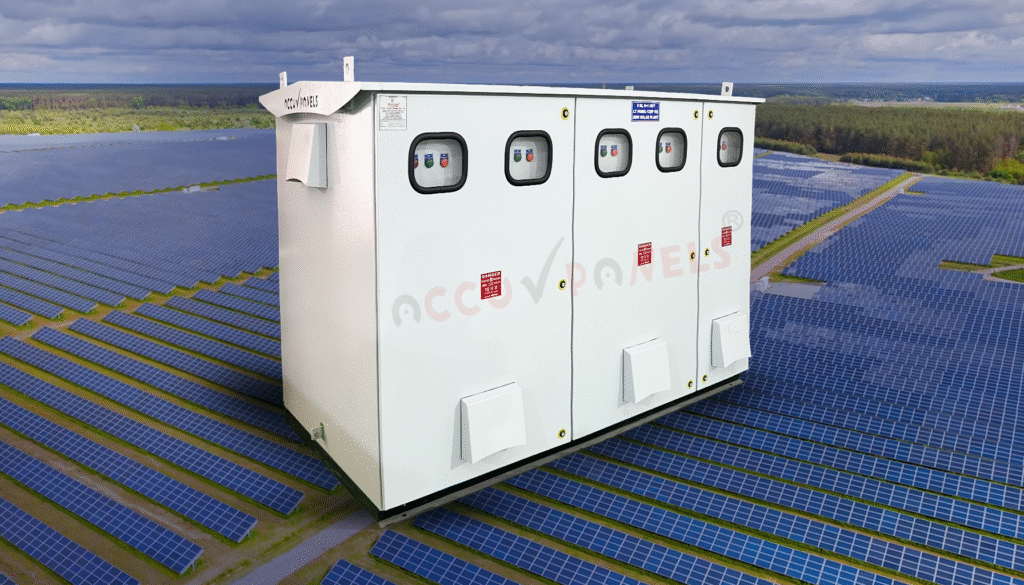
Renewable Energy Integration- 800V Fully Type Tested Panel (IEC-61439)
Accelerating Demand for IEC‑61439 Certified Smart Panels
Global Market Drivers
The demand for IEC‑61439 certified, modular, smart panels is rising rapidly across the globe. This growth is fueled by electric vehicles, rooftop solar projects, MW‑scale power plants, and the electrification of industrial, commercial, and smart city infrastructures. As energy systems evolve, reliable and intelligent panels are becoming essential for safe and efficient power distribution.
Accu‑Panels Energy Roadmap
Accu‑Panels Energy is strategically positioned to meet this demand with a clear and forward‑looking roadmap. The company is advancing coating technologies, moving beyond traditional seven‑tank processes toward C5 coatings, while exploring C6 and C7 powder coatings for superior corrosion resistance. At the same time, deeper AI integration is being developed to enable predictive maintenance and adaptive load management. User experiences are also being redesigned to suit Gen‑Z expectations, ensuring technology‑first and intuitive environments.
Safety and Protection First
Safety remains the highest priority. Every design incorporates arc‑flash mitigation, selective coordination, integrated surge protection, earth‑fault detection, and RCDs. Remote trip capabilities are tied directly to PLC and SCADA alarms, allowing operators to respond quickly. Furthermore, panels will ship with factory‑verified short‑circuit ratings, thermal imaging records, and embedded telemetry. These features empower operators to act before faults escalate, reducing downtime and enhancing reliability.
Sustainability and Quality Assurance
Sustainability is embedded in every stage of development. Enclosures are recyclable, finishes are low‑VOC, and designs minimize embodied carbon. Quality assurance combines IEC verification, third‑party testing, and continuous field feedback from experienced users. Importantly, international standard implementation will be routine, not optional. This ensures global interoperability and accelerates project approvals.
Building for Scale and Speed
Accu‑Panels is also focused on scalability and efficiency. Plug‑and‑play modular busbars, standardized protection modules, and AI‑assisted commissioning tools are being introduced. These innovations shorten lead times, simplify upgrades, and make panels more adaptable to future energy needs.
Conclusion — Market Demand, Future, and Technology Summary
In conclusion, the accelerating demand for IEC‑61439 certified smart panels is reshaping the energy landscape. Accu‑Panels Energy is responding with advanced coatings, AI‑driven intelligence, and Gen‑Z‑friendly designs. By prioritizing safety, sustainability, and scalability, the company is turning electrical panels into active enablers of the energy transition. With certified safety, digital readiness, durable coatings, and circular design, these panels are not only serviceable and future‑proof for India but also ready to meet global market demands.
“Future‑ready electrical panels are not just Switchgear assembly; they are the backbone of a safer, smarter and sustainable electrified world.”
By Author: Mr. Ghanshyam Soni — Founder and Managing Director, Accu‑Panels Energy Pvt Ltd India.







Leave a comment