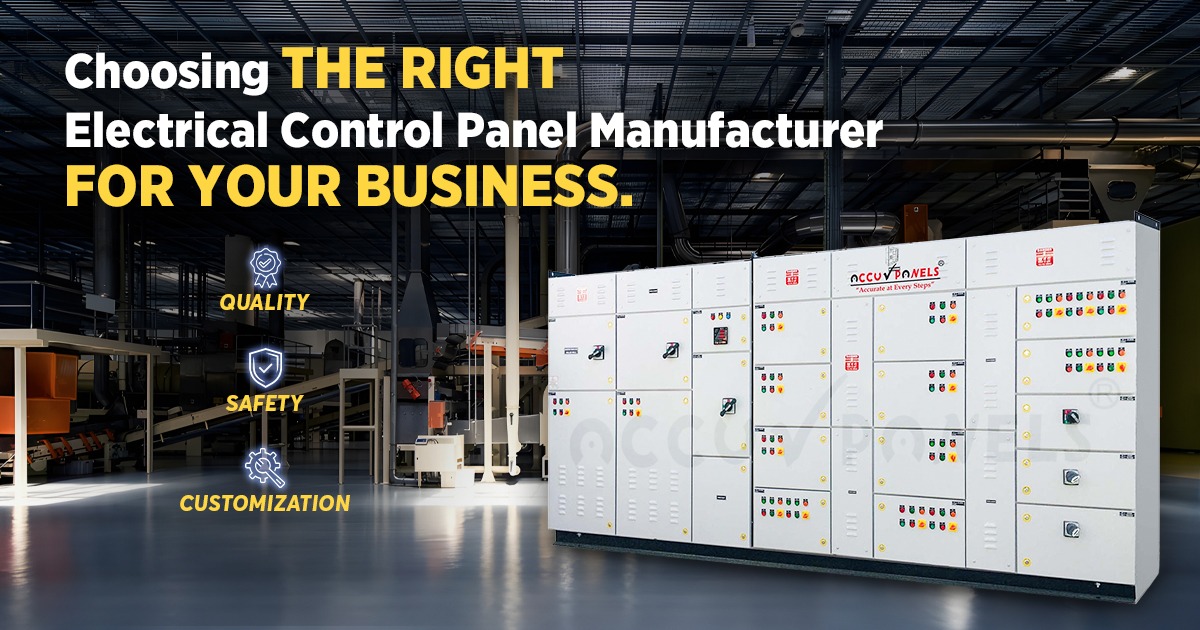
Choosing the Right Electrical Control Panel Manufacturer: A Complete Guide
When managing complex electrical systems, selecting the right electrical control panel manufacturer is more than a technical choice—it’s a strategic business decision. Whether you’re sourcing electrical panels for industrial, commercial, or solar applications, the quality and reliability of your electrical LT panel or electrical power panel directly impact safety, efficiency, and long-term performance.
Why Choosing the Right Manufacturer Matters
The electrical control panel serves as the operational brain of your infrastructure. It governs power distribution, equipment coordination, and protective mechanisms. Choosing a trusted electrical panel manufacturer ensures reduced downtime, enhanced system performance, and compliance with global standards. It also provides access to long-term technical support and tailored solutions.
How to Choose the Best Electrical Panel Manufacturer
To find the best electrical control panel manufacturer, go beyond price and delivery timelines. Consider these key factors:
Experience and Expertise
Look for manufacturers with a proven track record in producing electrical LT panels and power panels. Industry-specific experience is crucial, especially in sectors like solar, utility, and commercial. Review their portfolio to assess their capabilities in delivering PCC, MCC, APFC, AMF, and Synchronizing Panels.
Quality and Certifications
Ensure the manufacturer is ISO 9001:2015 certified and follows strict quality control measures. Look for CPRI-approved panels with 65kA short-circuit testing and IP65 ingress protection. High-quality materials and components from trusted brands are essential for durability and performance.
Customization and Engineering Precision
The ability to customize panels to your operational needs is vital. Manufacturers should offer integration of advanced features such as remote monitoring, overload protection, and scalability. Compliance with IEC 61439 and other relevant standards ensures global acceptance and safety.
Technical Support and After-Sales Service
Responsive customer service is key for troubleshooting and upgrades. Evaluate the manufacturer’s support structure, availability, and maintenance offerings. Efficient production and delivery aligned with project timelines are also important.
Cost vs. Value
While competitive pricing is important, never compromise on quality. Consider the long-term value of the panel in terms of energy efficiency, ease of maintenance, and durability. Transparent warranty and service terms add to the overall value.
Evaluation Process: Step-by-Step
Start by researching and shortlisting electrical panel manufacturers in India, especially in regions like Ahmedabad and Gujarat. Prepare a detailed Request for Proposal (RFP) outlining your technical requirements. Compare responses and arrange site visits to inspect manufacturing capabilities and quality control processes.
Ask for references and read customer reviews to validate satisfaction. Once you’ve gathered all necessary information, make your final selection and negotiate contract terms including delivery schedules, warranty coverage, and customization agreements.
Accu-Panels Energy: A Leading Electrical Panel Manufacturer in India
Accu-Panels Energy stands out as a top electrical panel manufacturer in Ahmedabad and across India. With a strong presence in Gujarat, Accu-Panels delivers high-quality solutions including PCC, MCC, APFC, AMF, and Synchronizing Panels. Their ISO 9001:2015 certification and CPRI-approved LT panels reflect a commitment to safety, innovation, and engineering excellence.
Accu-Panels Energy offers solar LT panels up to 800V and ranks among the top 10 electrical panel manufacturers in India. Their dedication to customization, quality, and timely delivery makes them a preferred choice for industrial and commercial projects.
Key Considerations When Selecting a Panel
When choosing an electrical control panel, consider the following:
- Application and environment: Indoor, outdoor, industrial, or solar use
- Voltage and current ratings: Match with load requirements
- Enclosure type and IP rating: Protection against dust, water, and corrosion
- Component compatibility: Ensure seamless integration with existing systems
- Future scalability: Allow room for expansion and upgrades
- Compliance with electrical standards: IEC, ASTA, CE, and local codes
Understanding IEC 61439
IEC 61439 governs low-voltage switchgear and control gear assemblies. It covers design verification, routine testing, and performance evaluation. Compliance ensures global safety, reliability, and market acceptance.
LT Panel Capacity Explained
LT (Low Tension) Panels typically operate at 415V and are designed for low-voltage power distribution. Depending on the application, they can handle loads up to 1000V and are widely used in industrial, commercial, and residential sectors.
Final Thoughts
Choosing the right electrical panel manufacturer in India is a decision that shapes your project’s success. By evaluating technical capabilities, certifications, customization options, and support services, you ensure your infrastructure is powered by excellence.
For businesses seeking a trusted partner, Accu-Panels Energy offers unmatched quality, innovation, and service—making them a top contender among electrical panel manufacturers in Gujarat and beyond.
Buyer’s checklist: 10 questions to ask any panel manufacturer
| # | Question | What a good answer looks like |
|---|---|---|
| 1 | Is the design type-tested to IEC 61439, and by whom? | A CPRI (or equivalent NABL lab) report for short-circuit, temperature rise, dielectric and IP — not just “as per IEC” |
| 2 | What fault level (Icw) is the busbar tested for? | A kA-for-1-s figure that matches or exceeds your calculated fault level |
| 3 | Which form of separation do you offer? | Form 2b to 4b explained with a recommendation for your maintenance philosophy |
| 4 | Is the company ISO 9001:2015 certified and CE-marked? | Current certificates, not expired ones |
| 5 | What routine tests are done on every panel? | IEC 61439-1 clause 11: dielectric, insulation resistance, wiring, functional — with a signed test certificate |
| 6 | Which drawings do I get before fabrication? | GA, SLD, schematics, BOM and general notes for approval |
| 7 | Can I witness the factory acceptance test? | Yes, with a documented FAT procedure |
| 8 | What enclosure, sheet thickness and finish? | 2.0 mm frame / 1.6 mm doors CRCA, 7-tank pre-treatment, powder or C5 coating for harsh sites |
| 9 | Which switchgear brands, and can I specify mine? | Leading global brands with your approved vendor list honoured |
| 10 | What after-sales support and warranty? | Named service contact, spares availability, written warranty certificate |
Frequently asked questions
What is the difference between a manufacturer and a franchisee or assembler?
A manufacturer designs, fabricates and type-tests its own panel system. A franchisee or assembler builds a switchgear brand’s licensed design and relies on the brand’s type tests; an unlicensed assembler may have no type-test evidence at all. Ask to see the report in the manufacturer’s own name.
Accu-Panels Energy, an electrical control panel manufacturer based in Ahmedabad, builds custom control, motor-control and automation panels for industrial, solar and infrastructure projects; the checklist below is the one our own engineering team uses when a consultant evaluates a vendor.
How do I verify a CPRI report?
Check that the report number, tested ratings (kA, A, IP) and the enclosure system match the panel offered, and that the report is issued to the company quoting you. Accu-Panels publishes an explanation of its report here.
Is the cheapest quote usually the wrong one?
Often. Compare busbar material and size, form of separation, sheet thickness, switchgear brand and test scope line by line before comparing price — the differences usually explain the gap.
Which panel types should one manufacturer cover?
Ideally the full LT range — PCC, MCC, APFC, synchronising, bus duct and solar ACDB/DCDB — so one vendor owns the interfaces. See the complete LT panel range.
Ready to compare? Send Accu-Panels Energy your SLD and receive a techno-commercial offer that answers all ten questions above.








Ghanshyam Soni
Choosing the Right Electrical Control Panel Manufacturer
Selecting an electrical control panel manufacturer plays a vital role in the efficiency, safety, and success of your operations. By evaluating industry experience, engineering expertise, certifications, support services, and customization capabilities, businesses can make confident, informed decisions. Accu-Panels Energy stands out in India for its innovation, quality assurance, and wide portfolio of certified electrical panels.
What Needs to Be Considered When Selecting a Control Panel:
Intended application and operating environment
Voltage and current requirements
Type of enclosure and IP rating
Component compatibility with existing systems
Compliance with standards like IEC 61439
Scalability for future upgrades
Safety features and ease of operation
Thorough evaluation of technical, operational, and support factors leads to smarter investments and long-term reliability.